
Large Parcel Delivery UK: The Complete Guide to Sending Big Items
Ever had that sinking feeling when your go-to courier rejects your package for being too big or heavy? You're not alone. The stress of finding a trustworthy service, the worry about your item arriving in one piece, and the shock of unexpectedly high quotes can make sending bulky goods a real headache. But arranging a large parcel delivery in the UK doesn't have to be a complicated or costly ordeal. In fact, with the right knowledge, it can be surprisingly straightforward and affordable.
This is your complete guide to sending big items with total confidence. We’ll walk you through everything, from expert packing techniques that protect even the most awkward shapes to choosing the perfect courier service that won’t break the bank. You'll discover how to find the cheapest and safest options for your needs, get clear, upfront quotes without hidden fees, and ensure your parcel reaches its destination securely and on time. Let's take the guesswork out of sending your large items.
Key Takeaways
- Understand that a parcel's size (volumetric weight), not just its physical weight, can classify it as 'large' and significantly affect the price.
- Compare traditional carriers with modern courier matching platforms to find the most cost-effective and suitable service for your needs.
- Learn the essential packing techniques using the right materials to prevent damage in transit and avoid unexpected surcharges from the courier.
- The final price of your large parcel delivery is influenced by key factors including speed, distance, and the level of insurance cover you choose.
What Counts as a 'Large Parcel'? Understanding the UK Limits
Before you can book a large parcel delivery , it’s crucial to understand what couriers actually classify as 'large'. The term is not subjective; it's based on strict size and weight limits that determine the service, handling, and price. The world of package delivery operates on two key measurements: actual weight (or 'dead weight') and volumetric weight. Your shipping cost will be based on whichever of these two figures is higher.
Standard vs. Large vs. Freight: Know the Difference
UK couriers categorise shipments into three main tiers. Understanding where your item fits is the first step to getting an accurate quote and avoiding unexpected fees. While standard parcels cover most day-to-day shipments, the large parcel category is designed for items that exceed these limits but are not big enough to require a pallet.
| Service Type | Typical Max Weight | Typical Max Length |
|---|---|---|
| Standard Parcel | Up to 30 kg | Up to 150 cm |
| Large / Oversized Parcel | 30 kg - 70 kg | 150 cm - 240 cm |
| Pallet / Freight | Over 70 kg | Over 240 cm |
Note: These are general guidelines; always check the specific limits of your chosen courier.
Calculating Volumetric Weight: A Simple Guide
Why would a lightweight box of pillows cost more to ship than a small, heavy box of books? The answer is volumetric weight. Couriers charge for the space an item occupies in their vehicle. The standard industry formula is:
(Length x Width x Height in cm) / 5000 = Volumetric Weight in kg
For example, a large canvas painting measuring 120cm x 80cm x 5cm might only weigh 4kg. However, its volumetric weight is (120 x 80 x 5) / 5000 = 9.6kg. The courier will charge for the higher 9.6kg value.
Common Items That Fall into the Large Parcel Category
Many everyday items require a specialist large parcel delivery service, especially things bought and sold on platforms like eBay, Gumtree, or Facebook Marketplace. Common examples include:
- Flat-pack furniture (wardrobes, desks, bookcases)
- Bicycles (boxed for shipping)
- Large televisions or computer monitors
- Car parts like bumpers, exhausts, or alloy wheels
- Musical instruments such as guitars or keyboards in hard cases
- Large children's toys or sporting equipment (e.g., a golf bag)
Your Two Main Options: Traditional Carriers vs. Courier Matching Platforms
When you need to arrange a large parcel delivery in the UK, you generally have two distinct paths to choose from. The first is the traditional route, using a well-known national carrier with its own fleet. The second is a more modern, flexible approach: using a courier matching platform. Understanding the differences between these two models is key to finding the most cost-effective and convenient solution for your specific needs.
Option 1: Using Traditional National Couriers
This is the method most people think of first. Household names like Royal Mail, DPD, and Evri operate extensive networks of depots and vehicles across the country. Their main advantage lies in brand recognition and sophisticated, end-to-end tracking systems that provide detailed updates.
However, this model can be restrictive and expensive for oversized items. Their automated sorting hubs and delivery processes are optimised for standard-sized boxes. Consequently, they often have rigid size and weight limits, and exceeding them can lead to substantial surcharges. You may also find there's little flexibility for collection times, often leaving you with a wide, inconvenient window.
Option 2: Using a Courier Matching Service (like Courier Pro)
A courier matching platform is a digital marketplace that connects you with thousands of independent, vetted couriers who are already making journeys across the UK. The core principle is efficiency: by utilising spare capacity in vans already on the road, these platforms can offer significantly lower prices.
The benefits of this model are compelling, especially for bulky goods:
- Significant Cost Savings: Because you are booking space on a route a courier is already taking, you can often save 50% or more compared to a dedicated trip from a traditional service.
- Greater Flexibility: Independent couriers are better equipped to handle awkwardly shaped items and can often accommodate specific collection and delivery times that suit your schedule.
- Direct Communication: You can typically speak directly with the person handling your item, giving you peace of mind and the ability to coordinate details easily.
Regardless of which service you choose, it's always wise to understand your consumer rights for parcel delivery to ensure you're protected. Platforms that connect you with rated, professional couriers provide a reliable and modern alternative for sending big items without the big price tag.
See how much you could save on your next large delivery. Get a free quote today.
How to Prepare & Pack Your Large Parcel for Safe Transit
Proper packaging is the single most important step in ensuring your item arrives safely. It's not just about preventing damage; it's also about avoiding extra fees. Couriers may apply surcharges for poorly packaged items that are difficult to handle or pose a risk to other parcels. Investing a little time and effort here is crucial for a smooth large parcel delivery experience.
Gathering the Right Packing Materials
Using the correct materials is half the battle. Household stationery won't suffice for heavy or bulky items. Here’s what you’ll need:
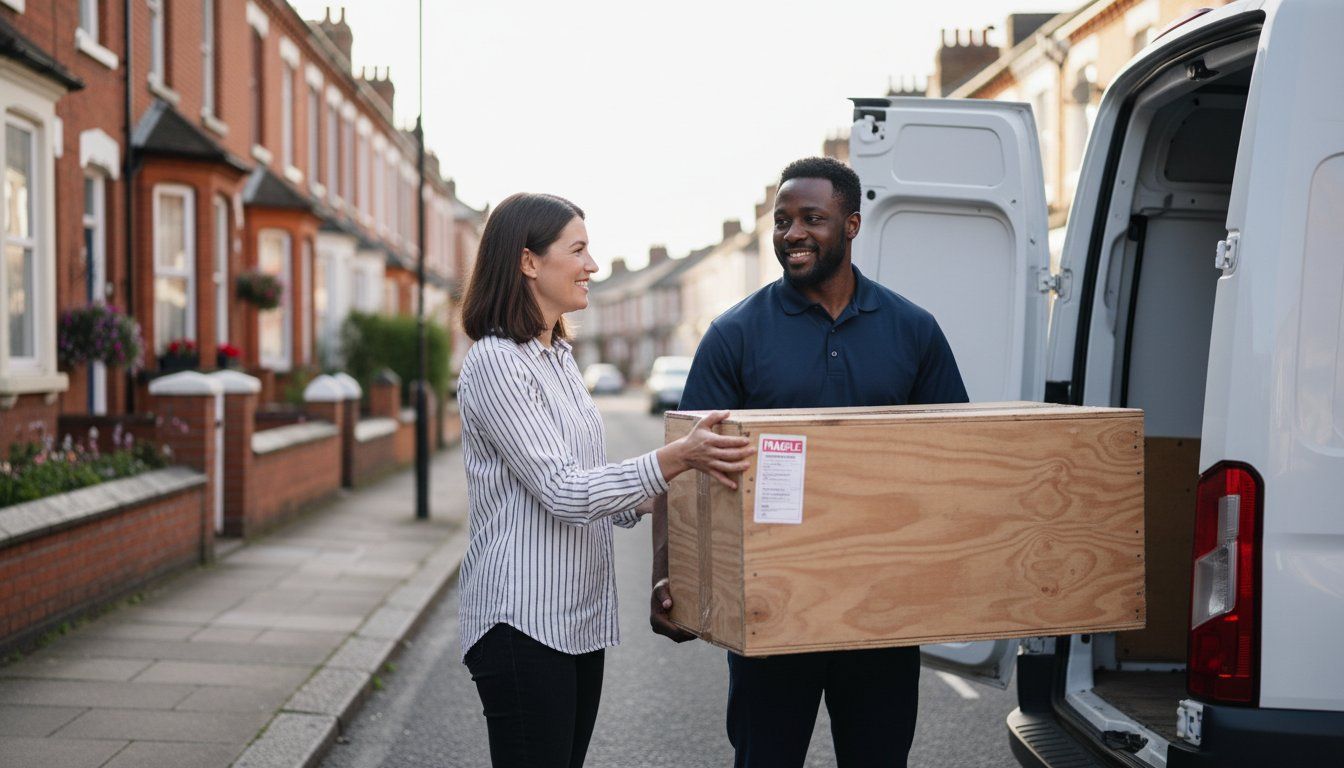
- The Right Box: Always use a new, sturdy, double-walled corrugated cardboard box. For extremely heavy or valuable items, consider a triple-walled box or even a wooden crate. Ensure the box is large enough to allow for at least 5-6 cm of cushioning around the item.
- Internal Cushioning: Your goal is to prevent any movement inside the box. Use high-quality bubble wrap, foam inserts, packing peanuts, or crumpled paper to fill every single void. The item should be suspended in the middle of the box, away from the walls.
- Strong Sealing Tape: Do not use Sellotape or masking tape. Use strong, wide (at least 48mm) parcel tape, preferably vinyl or polypropylene. Tape all seams and edges using the 'H-taping' method for maximum security.
The 'Box-in-a-Box' Method for Fragile Items
For items that are particularly fragile or valuable, the 'box-in-a-box' or double-boxing method offers maximum protection. First, wrap your item securely and place it in a smaller, well-cushioned box. Seal this inner box, then place it inside a larger, stronger outer box. Fill the space between the two boxes with plenty of cushioning material. This creates a highly effective shock-absorbing system, protecting the contents from bumps and drops during transit.
Measuring and Weighing for an Accurate Quote
To get an accurate price and avoid unexpected costs, you must provide the final dimensions and weight of your packed parcel. Use a tape measure to get the length, width, and height in centimetres (cm). For the weight, use a set of bathroom scales and record the value in kilograms (kg). Being precise is vital, as courier charges are based on either the actual weight or the volumetric weight, whichever is greater. This commitment to accuracy aligns with the government's delivery best practice guide , which promotes transparency in charges. Once you have these details, you can get a precise quote for your large parcel delivery.
Understanding the Costs: What Influences the Price of Large Parcel Delivery?
When you need to send a large or bulky item, the price you're quoted isn't just a random figure. It’s a carefully calculated cost based on a blend of factors that reflect the resources required to get your parcel from A to B safely and on time. Understanding these elements helps you manage your budget and see why a quick delivery to a remote area costs more than a standard city-to-city shipment.
Core Pricing Factors: Size, Weight, and Distance
The three most significant variables impacting your quote are the physical characteristics of your parcel and its journey. Couriers must account for:
- Size & Volumetric Weight: It’s not just about how heavy an item is, but how much space it occupies in a van. A large but light item, like a piece of furniture, is priced using its 'volumetric weight'. This ensures the cost reflects the room it takes up, which could otherwise be used for multiple smaller parcels.
- Dead Weight: The actual weight in kilograms still matters. Heavier items require more fuel to transport and may need special handling equipment or a two-person team, directly influencing the final price of your large parcel delivery .
- Distance & Location: The further your parcel has to travel, the higher the cost. A delivery from Birmingham to Manchester will be significantly cheaper than sending the same item from London to a remote village in the Scottish Highlands, which requires more time, fuel, and specialised routing.
Other Key Variables: Speed and Service Level
Beyond the basics, the type of service you choose plays a crucial role in the final cost. Consider the following:
- Urgency: If you need it there tomorrow, expect to pay a premium. Next-day or even same-day services demand priority logistics and disrupt standard delivery routes, which is reflected in the higher price compared to a more economical 3-5 day service.
- Service Type: A convenient door-to-door collection service will generally cost more than if you drop the parcel off at a designated depot yourself.
- Insurance: Standard liability often covers only a nominal amount (e.g., £20-£50). If you are sending a valuable item, adding enhanced insurance for its full value will increase the quote but provides essential peace of mind.
How to Get the Cheapest Large Parcel Quote
Finding the best price doesn't have to be complicated. The smartest approach is to compare your options. To secure the most competitive rate for your large parcel delivery , follow these simple steps:
- Be flexible: If your delivery isn't time-sensitive, opting for a standard service over an express one can lead to significant savings.
- Measure accurately: Always provide precise dimensions and weight. Inaccurate figures can result in unexpected surcharges from the courier.
- Compare the market: The fastest way to find the best deal is by using a comparison service. Instead of visiting multiple websites, you can see all your options in one place.
Ready to find the best price for your shipment? Compare quotes from thousands of UK couriers in minutes and get your large item on its way for less.
Send Your Large Items with Confidence
Navigating the world of sending bulky goods across the UK can seem daunting, but it doesn't have to be. As this guide has shown, the key to success is preparation. By correctly measuring your item, understanding the difference between traditional carriers and courier matching platforms, and packing your parcel securely, you're already ahead of the game. These steps are crucial for ensuring your large parcel delivery is not only safe but also as affordable as possible, avoiding unexpected surcharges and transit issues.
Now that you're equipped with the right knowledge, it's time to find the best price. Instead of spending hours searching, why not let the quotes come to you? By using a platform that connects you with thousands of trusted UK drivers, you can save up to 50% by utilising their spare van space. It’s the perfect, cost-effective solution for shipping furniture, bulky eBay sales, or moving heavy equipment.
Get Your Free, No-Obligation Quote to Send a Large Parcel and discover just how simple and affordable shipping your big items can be!
Frequently Asked Questions
What is the absolute cheapest way to send a large parcel in the UK?
The cheapest method is typically found by using a courier comparison website. These platforms allow you to compare quotes from multiple carriers like Evri, DPD Local, and Parcelforce for your specific parcel size and weight. Opting for an economy service with a longer delivery window (e.g., 3-5 days) instead of an express next-day option will also significantly reduce the cost. Always ensure you have accurate dimensions and weight to get the best price.
Can I send a piece of furniture like a sofa or mattress with a large parcel service?
Standard large parcel services are generally designed for boxed items and may not be suitable for assembled furniture like sofas or mattresses. While they can handle large flat-pack items, for bulky, unwieldy goods you will likely need a specialised furniture courier or a 'man and van' service. These services use appropriate vehicles and have the expertise to handle such items safely, often offering a two-person team to assist with lifting and moving.
How do I arrange for collection if I can't lift the parcel myself?
Standard courier drivers are not insured to enter your property and typically expect the parcel to be ready for collection at your doorstep or on the ground floor. If you cannot lift the item yourself, you should look for a service that specifically offers a two-person collection team. Many dedicated furniture or freight couriers include this as part of their service, so be sure to check this option when you are booking your delivery.
Is my large parcel automatically insured against damage or loss?
No, full insurance is not usually automatic. Most courier services include a very basic level of complimentary cover, often limited to just £20-£50. For valuable items, it is essential to purchase enhanced transit insurance during the booking process to cover the item's full value. Always read the terms carefully, as some policies may have exclusions for certain goods, such as glass or ceramics. Proper packaging is also a condition of any insurance cover for your large parcel delivery.
What happens if my parcel is bigger or heavier than I declared?
Declaring incorrect dimensions or weight can lead to significant issues. The courier will re-weigh and measure the parcel at their depot, and you will be charged a surcharge for the discrepancy, often including an additional administration fee. In some cases, the collection driver may refuse the item if it's obviously oversized, or the parcel could be held by the courier until the outstanding balance is paid. Accurate measurements are crucial to avoid extra costs and delays.
Can I send a large parcel to Northern Ireland or the Scottish Highlands?
Yes, you can send large parcels to these locations, but you should expect higher costs and longer transit times compared to mainland UK deliveries. Couriers classify these areas, along with the Isle of Wight and other UK islands, as remote or extended areas, which always incur a surcharge. When getting a quote for your large parcel delivery, it is vital to enter the correct destination postcode to receive an accurate price and realistic delivery estimate.