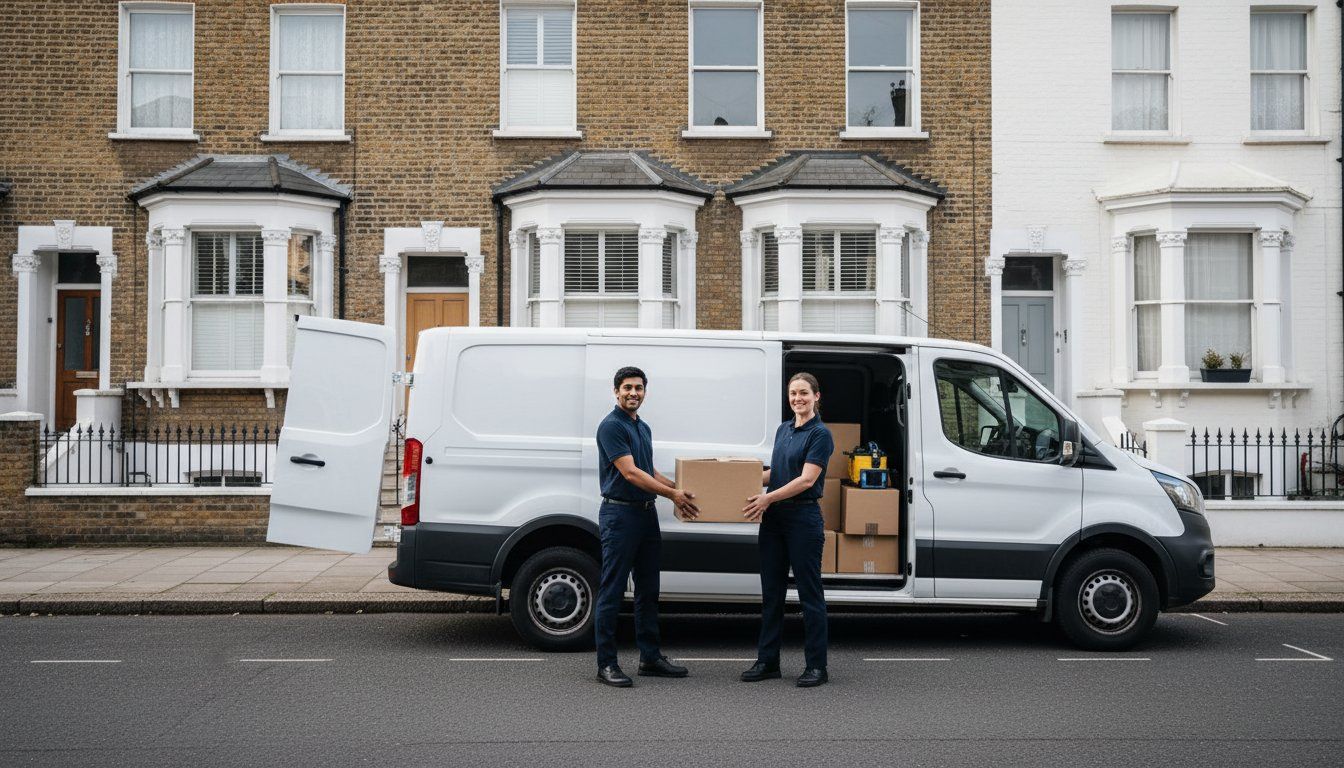

Moving House: The Ultimate Checklist for a Stress-Free UK Move
Let's be honest: the words 'moving house' can trigger a mild sense of panic. The initial excitement for a new home is often quickly overshadowed by a mountain of to-do lists, the worry of spiralling costs, and the sheer physical effort of it all. It’s a process that can feel completely overwhelming before the first box is even packed, leaving you wondering where on earth to begin.
But what if you could trade that stress for a smooth, organised experience? That’s exactly what our ultimate checklist is designed to deliver. We've broken down the entire process of moving house in the UK into a simple, timeline-based guide. We’ll walk you through everything, from finding competitive removal quotes that won't break the bank (£), to decluttering effectively, and managing all the crucial admin so nothing gets forgotten.
Consider this your roadmap to a seamless move. Follow our steps, and you’ll be settling into your new space efficiently, ensuring the only thing you need to worry about on day one is where you packed the kettle for that all-important first brew.
Key Takeaways
- Proper planning begins two months out; secure your budget and book reputable movers early to avoid disappointment and higher costs.
- Tackle the 'great sort-out' and essential admin tasks a month in advance to streamline your packing process and prevent last-minute chaos.
- A well-organised 'Moving Day Survival Kit' is crucial for a smooth transition when moving house; our checklist ensures you won't be searching for the kettle.
- A clear plan for the day itself transforms you from stressed to in-control, allowing you to direct movers effectively and handle final property checks with confidence.
8 Weeks Before You Move: Planning, Budgeting, and Booking
Welcome to the starting line of your moving journey! With two months to go, you have the perfect amount of time to lay a solid foundation for a stress-free experience. This is the strategic phase where big decisions are made, preventing the last-minute panic that can make moving house so challenging. By planning now, you take control of your budget, your schedule, and your peace of mind. For a complete overview of the entire process, it's helpful to understand what is involved in moving house from a high level before diving into the details.
The first, and most important, task is to start decluttering. Go through each room and decide what to keep, sell, donate, or discard. A lighter load means a cheaper and quicker move.
Set Your Moving Budget
A clear budget is your most powerful tool. Start a simple spreadsheet to track every potential expense, ensuring there are no nasty surprises later. Remember to account for everything, not just the obvious costs.
- Removal Service: The largest expense, varying from a few hundred to over a thousand pounds.
- Packing Materials: Boxes, strong tape, bubble wrap, and marker pens can add up to £50-£150.
- Hidden Costs: Factor in fees for mail redirection with Royal Mail, utility connection charges, and potential end-of-tenancy professional cleaning services.
Decide: Traditional Removals vs. Man and Van Service
Your choice of moving service will have the biggest impact on your budget. A traditional removals company is often best for large family homes (4+ bedrooms), offering comprehensive services that can include full packing and furniture disassembly. However, for flats, smaller homes, or those on a tighter budget, a Man and Van service offers incredible flexibility and value. This is where services that connect you with local, affordable man and van providers excel, offering a tailored approach to your specific needs.
Get & Compare Quotes (The Smart Way)
Never accept the first quote you receive. Prices and service levels can vary significantly between providers. Using a comparison platform is the most efficient way to gather multiple quotes without filling out endless forms. When you review your quotes, look beyond the price and check the details:
- Insurance: Is Goods in Transit insurance included to protect your belongings?
- Labour: How many helpers are part of the price? Will you need to help lift?
- All-in Costs: Confirm that fuel, mileage, and VAT are included in the final figure.
Taking a few minutes to compare properly can save you hundreds of pounds. Get multiple, no-obligation quotes from trusted movers in minutes.
4-6 Weeks to Go: The Great Sort-Out and Essential Admin
With just over a month until the big day, the process of moving house starts to feel very real. This is the perfect time to shift gears from planning to action. Your focus now should be on two key areas: tackling the essential administration and beginning the physical process of sorting and packing. Getting a head start now will save you a significant amount of stress later on.
Your 'Change of Address' Admin Checklist
Don't underestimate the time it takes to notify everyone of your move. Start working through your list of contacts now to ensure a smooth transition of services and mail. Tackling this paperwork early is key. For a comprehensive breakdown, major UK banks like Halifax provide an official moving checklist that can help you track every notification. Key organisations to contact include:
- Utility Providers: Inform your gas, electricity, and water suppliers of your move-out date to arrange final meter readings.
- Local Authority: Contact your current and new councils regarding your council tax accounts.
- Financial & Official Bodies: Update your address with your bank, credit card companies, pension providers, and the DVLA.
- Health & Subscriptions: Notify your doctor, dentist, and optician, and update any magazine or online shopping subscriptions.
- Royal Mail: Arrange a mail redirection service for at least 3-6 months to catch any post you may have missed.
Gather Your Packing Supplies
You can never have too many boxes. Start sourcing them now by asking local supermarkets, off-licences, or community groups online. While free boxes are great for non-fragile items, it's wise to invest in quality materials for everything else. Make sure you have plenty of strong packing tape, bubble wrap for breakables, and bold marker pens for clear labelling. Consider purchasing specialist boxes, such as wardrobe boxes for clothes and reinforced TV boxes for electronics.
Start Packing Non-Essential Items
Packing is a marathon, not a sprint. Begin now to avoid a last-minute panic. Start with the rooms and items you use the least, such as the guest bedroom, attic, or garage. This is the ideal time to pack away things like out-of-season clothing, books you've already read, decorative ornaments, and sentimental items. The golden rule? Label every single box clearly with its contents and, crucially, which room it belongs to in your new home. This simple step will make unpacking infinitely easier.
1-2 Weeks Before Moving Day: The Final Countdown
With moving day on the horizon, the final two weeks are all about smart packing and finalising logistics. This is where your careful planning pays off, transforming potential chaos into a controlled and systematic process. By focusing on the details now, you're setting yourself up for a much smoother experience when the removal van arrives. This is the final push before you can settle into your new home.
Expert Packing Strategies Room-by-Room
Efficient packing is a game-changer. Don't just throw things into boxes; pack with a strategy to make unpacking at the other end significantly easier. Use smaller boxes for heavy items like books and records to keep them manageable and prevent back strain. For delicate items, wrap each one individually in packing paper or bubble wrap and clearly label the box as 'FRAGILE' on all sides. To maximise precious space in the van, use vacuum-sealed bags for bulky bedding, towels, and out-of-season clothing. Before you unplug computers and TVs, take a quick photo of the cable setup - your future self will thank you for this simple trick!
Assemble Your 'Moving Day Survival Kit'
This isn't a luxury; it's a necessity. Your survival kit is the one box that should travel with you in your car, not on the removal van. It contains everything you'll need for the first 24 hours in your new home, ensuring you can make a celebratory cup of tea and find the paracetamol without rummaging through endless, identical-looking boxes. Be sure to pack:
- The kettle, tea bags, instant coffee, mugs, snacks, and a bottle opener.
- Essential toiletries for everyone, a basic first-aid kit, and any personal medication.
- Important documents (like the new property deeds), keys, phone chargers, and a small toolkit for basic assembly.
Final Confirmations and Arrangements
With the practical side of moving house nearly complete, it's time to lock down the final arrangements. Proactively contact your moving company to reconfirm the exact date, arrival time, and addresses for both your old and new properties. This simple call prevents any last-minute misunderstandings. These final checks are a crucial part of any comprehensive moving timeline and ensure no detail is overlooked. If parking is restricted at either location, now is the time to arrange a permit with the local council or reserve a space for the van. To minimise stress on the day, consider organising a babysitter for young children or a pet-sitter to keep your furry friends safe and out of the way of heavy lifting.
Moving Day and Beyond: Execution and Settling In
The day you've been planning for is here. With boxes packed and logistics arranged, your focus now shifts to execution. A calm, methodical approach will ensure the final stage of your move is efficient and low-stress. Your primary role is to orchestrate, not to do the heavy lifting yourself. Be the project manager of your move.
Your Moving Day Morning Checklist
Before the removal van arrives, complete these final tasks at your old property to ensure a clean break:
- Protect Surfaces: Lay down dust sheets or old blankets to protect carpets and flooring from the heavy foot traffic.
- Final Walkthrough: Check every cupboard, loft, and shed one last time to ensure nothing is left behind.
- Meter Readings: Take photos of your gas, electricity, and water meters and submit the final readings to your suppliers.
- Essentials Box: Keep your 'survival kit', important documents, and valuables with you in your own vehicle, not in the moving van.
Arriving at Your New Home: First Steps
Once you have the keys, your first job is to prepare for the movers' arrival. Before anything is brought inside, quickly check that the utilities-water, electricity, and gas-are connected and working. As the team unloads, direct them clearly, placing labelled boxes and furniture in their designated rooms. This saves you immense effort later. Keep a close eye on your items as they come off the van and note any potential damage on the delivery paperwork immediately.
The First Night: Unpacking for Comfort
Resist the urge to unpack everything at once. Your goal for the first evening is comfort and rest. Prioritise these key tasks for a peaceful first night:
- First, assemble the beds and make them with fresh linen. A good night's sleep is non-negotiable.
- Locate your survival kit and plug in the kettle for a well-deserved cup of tea or coffee.
- Unpack a box of bathroom essentials, including toilet roll, soap, and towels.
- Finally, put your feet up. Order a local takeaway, relax, and congratulate yourself on a successful day. The rest can wait.
With the right preparation, the final stage of moving house can be exciting rather than stressful. By focusing on these essentials, you'll be settled and comfortable from the very first night. For specialist moves or extra support, our expert teams are always on hand to ensure everything goes to plan.
From Checklist to Comfort: Your Stress-Free Move Awaits
Following a structured timeline is the secret to a seamless transition. From budgeting and booking movers eight weeks out to methodically decluttering and tackling admin, breaking down the monumental task of moving house into manageable steps transforms potential chaos into calm control. You've done the planning; now it's time for the final, crucial piece of the puzzle.
Finding a reliable moving partner without the stress and high cost is simple. With just one form, you can receive multiple quotes from trusted, local movers. You could save up to 50% by connecting with couriers who have spare van space, making it perfect for everything from single items to full house moves. Ready to find your perfect mover? Get free, competitive quotes now.
You've got the checklist and the plan. Now, take that confident next step. Here's to a smooth move and creating wonderful new memories in your new home!
Frequently Asked Questions
What is the cheapest way to move house in the UK?
The most budget-friendly way to move house is a complete DIY approach. This involves hiring a van (from around £50-£100 per day) and doing all the packing, loading, and unloading yourself with help from friends and family. A close second is hiring a 'man and van' service. This is significantly cheaper than a full-service removal company, providing the transport and labour for a fixed hourly rate or a set price, offering a great balance between cost and convenience.
How far in advance should I book a removal company or man and van?
For full-service removal companies, it's wise to book at least 4-6 weeks in advance, especially if you plan to move during a peak time like summer, a bank holiday, or at the end of the month. 'Man and van' services are often more flexible, but booking 1-2 weeks ahead is still recommended to secure your preferred date and time. Leaving it to the last minute risks limited availability and potentially higher prices, so early booking is always best.
Should I get moving insurance?
Yes, absolutely. While reputable removal companies have 'Goods in Transit' insurance, it may not cover the full value of your possessions. Always check their policy's coverage limit and excess. For complete peace of mind, consider a dedicated moving insurance policy. This protects your belongings against accidental damage or loss during the entire process, from packing to unloading. First, check if your current home insurance policy offers any cover for moves, but a specialist policy is often more comprehensive.
How do I move fragile items like mirrors and TVs safely?
For mirrors and large pictures, place cardboard corner protectors on, then wrap them thoroughly in bubble wrap or a thick blanket. Transport them upright, wedged securely between soft items like mattresses. For TVs, use the original box and packaging if you still have it. If not, wrap the screen in a soft blanket, cover it with bubble wrap, and place it in a sturdy box clearly marked 'FRAGILE'. Always ensure the TV travels in an upright position.
What's the best way to label moving boxes?
An effective labelling system saves huge amounts of time. Use a thick marker pen to label at least two sides of every box (not the top, as they will be stacked). Clearly write the destination room (e.g., KITCHEN, MASTER BEDROOM) and a brief summary of the contents (e.g., 'Crockery' or 'Books'). For an even better system, use different coloured stickers for each room, making it easy to see where boxes should go at a glance.
Who do I need to notify when I move house?
Create a comprehensive list of people and organisations to notify. Key contacts include utility providers (gas, electricity, water), your local council for council tax, and your broadband/TV provider. You must also update your address with financial institutions like your bank and credit card companies, HMRC, and the DVLA for your driving licence and vehicle registration. Don't forget your GP, dentist, employer, and any subscription services. Consider setting up a Royal Mail Redirection service for any post you miss.
Can I hire movers just to load and unload a van I've rented?
Yes, many companies offer 'labour-only' services. This is an excellent middle-ground option if you are happy to hire and drive the van yourself but need professional help with the heavy lifting. It can significantly reduce the cost of moving house while protecting your back from strain. Most 'man and van' services and even some larger removal firms provide this as a standalone service, often charged by the hour. It’s perfect for ensuring your items are loaded safely and efficiently.